
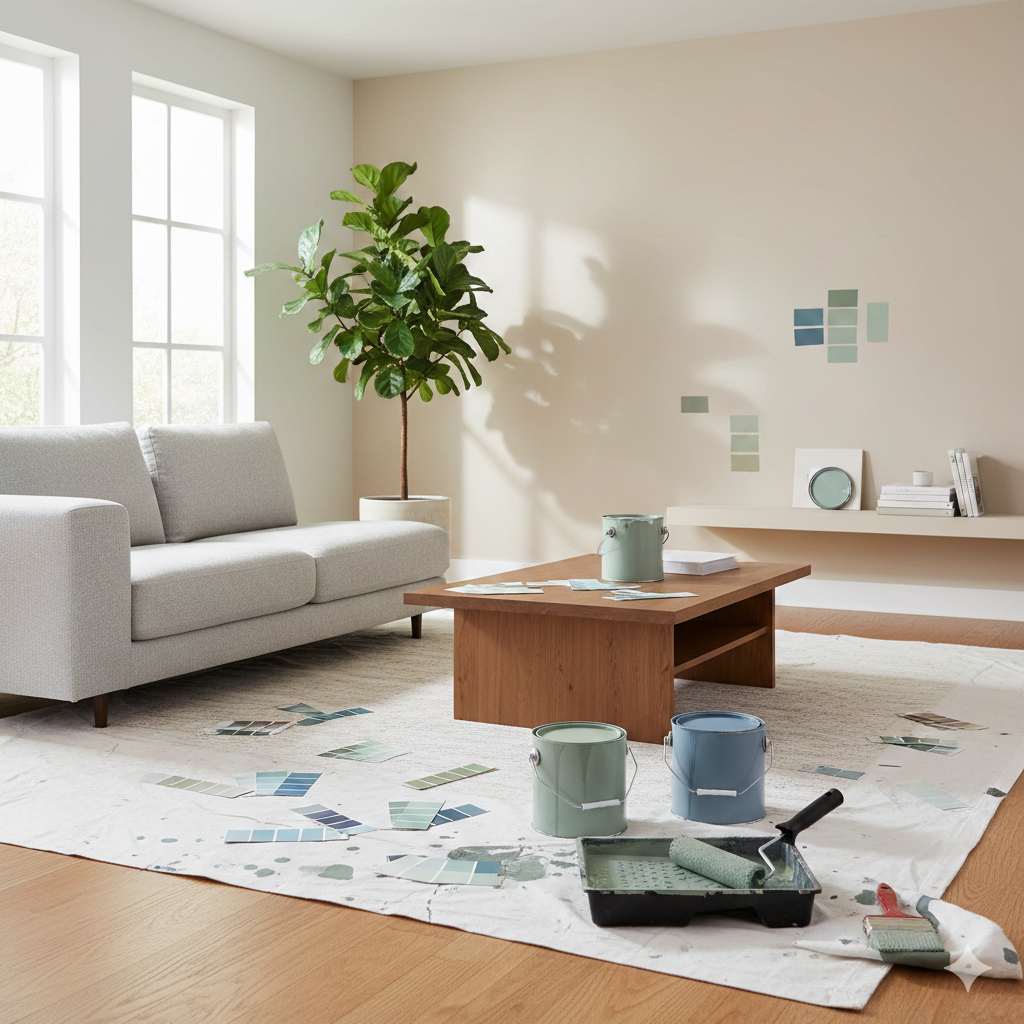
Interior Painting Tips: Choosing the Right Paint (The 2025 Guide)
We’ve all been there. You walk into the hardware store with a simple goal: buy a gallon of white paint. Twenty minutes later, you are standing in Aisle 4, staring blankly at a wall of 47 slightly different shades of “white,” debating between Eggshell, Satin, and something called Pearl.
You start to sweat. You grab the cheapest can and hope for the best.
Six hours later, the walls look streaky, the smell is giving you a headache, and that “white” looks suspiciously yellow under your living room lamps.
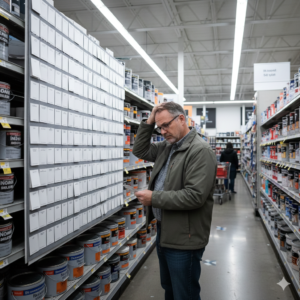
Choosing the right paint is about more than just picking a pretty color. It’s about chemistry, lighting, and lifestyle. As someone who has spent years with a brush in hand, I’ve learned that the difference between a “landlord special” and a professional finish usually happens before the can is even opened.
In this guide, we will cut through the jargon and break down exactly how to choose the perfect paint for your home, backed by the latest 2025 industry standards.
1. The Finish Factor: Decoding the Sheen
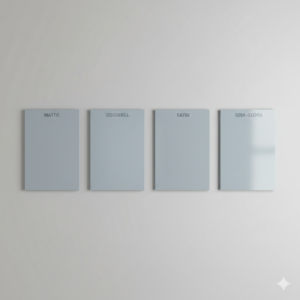
Before you pick a color, you must pick a sheen (or finish). This determines how shiny the paint is when dry. The sheen affects two things: durability and imperfection hiding.
Here is the golden rule of painting: The higher the shine, the more durable it is—but the more it highlights flaws.
Flat / Matte
The Look: Zero shine. It absorbs light, making colors look rich and velvety.
Best For: Ceilings, adult bedrooms, and low-traffic dining rooms.
The Pro: It hides bumps, scratches, and bad drywall jobs better than anything else.
The Con: It is notoriously hard to clean. Scrubbing a flat wall usually results in “burnishing” (shiny spots).
Eggshell (The “Goldilocks” Choice)
The Look: A soft, low luster—like the shell of an egg.
Best For: Living rooms, hallways, and kids’ bedrooms.
Why Pros Love It: It covers wall imperfections almost as well as matte but provides a wipeable surface. In 2025, eggshell remains the most popular finish for general living spaces.
Satin
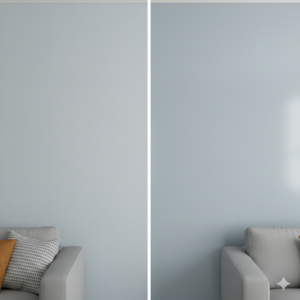
The Look: A pearl-like finish with a noticeable glow.
Best For: Kitchens, bathrooms, laundry rooms, and high-traffic corridors.
The Reality: Satin is tough. It resists moisture, mildew, and sticky fingers. However, your prep work needs to be good, as it will show waves in the drywall.
Semi-Gloss & High-Gloss
The Look: Shiny and reflective.
Best For: Trim, doors, baseboards, and cabinetry.
Durability: Bulletproof. You can scrub these surfaces with household cleaners without damage.
Insider Tip: If you have an older home with uneven walls, avoid satin or semi-gloss on the walls themselves. Stick to a high-quality washable matte (a newer technology that offers durability without the shine).
2. The Chemistry: Cheap vs. Expensive Paint
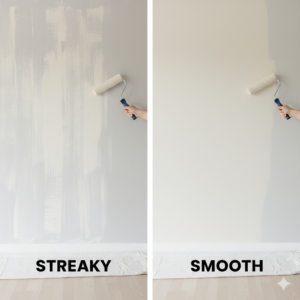
Is there really a difference between the $25 bargain bucket and the $70 premium gallon?
Yes, and it comes down to solids.
Paint is made of three main components:
Pigment: The color.
Binder: The glue that holds it to the wall.
Solvent (Liquid): The carrier that evaporates as it dries.
Cheap paints are often 60% liquid and 40% solids. When the liquid evaporates, you are left with a thin, weak layer of pigment. This means you will likely need three or four coats to get true color.
Premium paints are closer to 45% solids. You get a thicker, richer film that often covers in one or two coats.
The Takeaway: If you buy cheap paint, you will end up buying twice as much of it and spending twice as long painting. Invest in the premium line (e.g., Benjamin Moore Regal or Sherwin-Williams Emerald) to save yourself time and frustration.
3. 2025 Color Trends: The “Warmth” Shift
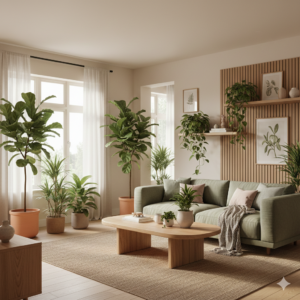
If you are still painting your walls “Realtor Gray,” stop.
According to 2025 design reports, the “Gray Era” is officially over. We are seeing a massive shift toward Biophilic Design—colors that mimic nature and bring warmth into the home.
Warm Neutrals: Think oatmeal, beige, and taupe (like Behr’s “Even Better Beige”). These shades make a room feel cozy rather than sterile.
Nature Tones: Muted sage greens, terracotta oranges, and deep oceanic blues are trending for living spaces.
Color Drenching: This is a major 2025 trend where you paint the walls, trim, and ceiling the same color. It makes small rooms feel larger and more cohesive, wrapping you in the color.
4. Health Check: Understanding VOCs
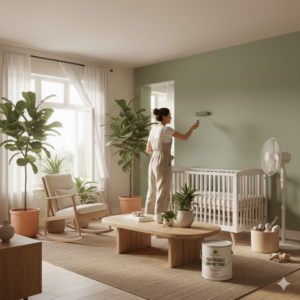
You know that “fresh paint smell”? That’s actually gas leaving the walls.
Volatile Organic Compounds (VOCs) are solvents that get released into the air as paint dries. They can cause headaches, dizziness, and are linked to long-term respiratory issues.
In 2025, the standard for a quality paint is Low-VOC (<50 g/L) or Zero-VOC (<5 g/L).
Why it matters: If you are painting a nursery, a bedroom, or a home with asthmatics, Zero-VOC is non-negotiable.
The Myth: “Eco-friendly paint doesn’t cover well.” This was true 10 years ago. Today, premium Zero-VOC paints perform just as well as traditional oil-based paints.
Stat Check: The market for low-VOC paints is projected to grow by nearly 7% in 2025, driven by homeowners who are willing to pay a premium for safer indoor air quality.
5. The “Metamerism” Trap (Lighting Matters)
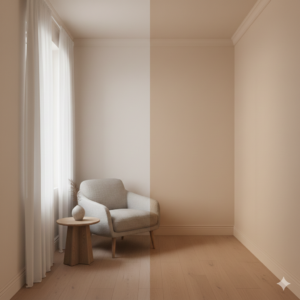
Have you ever bought a tan shirt that looked pink when you got it home? That’s metamerism—the phenomenon where colors change based on the light source.
Your paint will look different at 10:00 AM (natural sunlight) than it does at 8:00 PM (LED bulbs).
How to Avoid a Color Disaster:
Don’t trust the chip: Those tiny paper squares are ink, not paint. They are an approximation.
Buy a sample pot: Spend the $8. It is cheaper than regretting a $60 gallon.
The “Two-Wall” Test: Paint a 2×2 foot square on a wall that gets direct sunlight and a wall that stays in shadow. Watch how the color changes over 24 hours.
Frequently Asked Questions
Do I really need to use a primer?
If you are painting over a similar color and the walls are clean, modern “Paint and Primer in One” products work fine. However, you must use a dedicated primer if:
You are painting over a dark color with a light one.
You are painting over raw drywall or wood.
You are covering stains (water damage, crayon, smoke).
How much paint do I need?
The general rule is 1 gallon covers 350-400 square feet (one coat). For a standard 12×12 bedroom, you will usually need 2 gallons to apply the recommended two coats.
Can I use exterior paint inside for extra durability?
No. Exterior paints have flexible resins to handle freezing/thawing and often contain mildewcides that off-gas harmful chemicals for years. Never use them indoors.
What is the best paint for kitchen cabinets?
Do not use standard wall paint. You need a Urethane Alkyd Enamel. This mimics the hardness of an oil-based paint but cleans up with water. It cures into a hard shell that resists chipping and grease.
Conclusion: Don’t Rush the Process
Choosing the right paint is the foundation of your room’s atmosphere. It protects your investment and sets the mood for how you live.
By selecting the correct sheen for your room’s function, investing in higher-solid formulas, and testing your colors in real lighting, you ensure that your weekend project results in a finish that lasts for years.
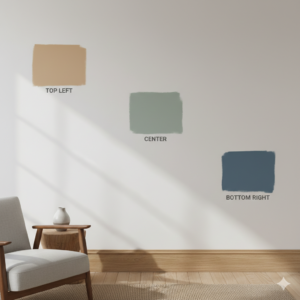
Ready to transform your space? Stop staring at the chips and start testing. Go buy three sample pots today, put them on your wall, and live with them for a few days. Your future self (and your walls) will thank you.